

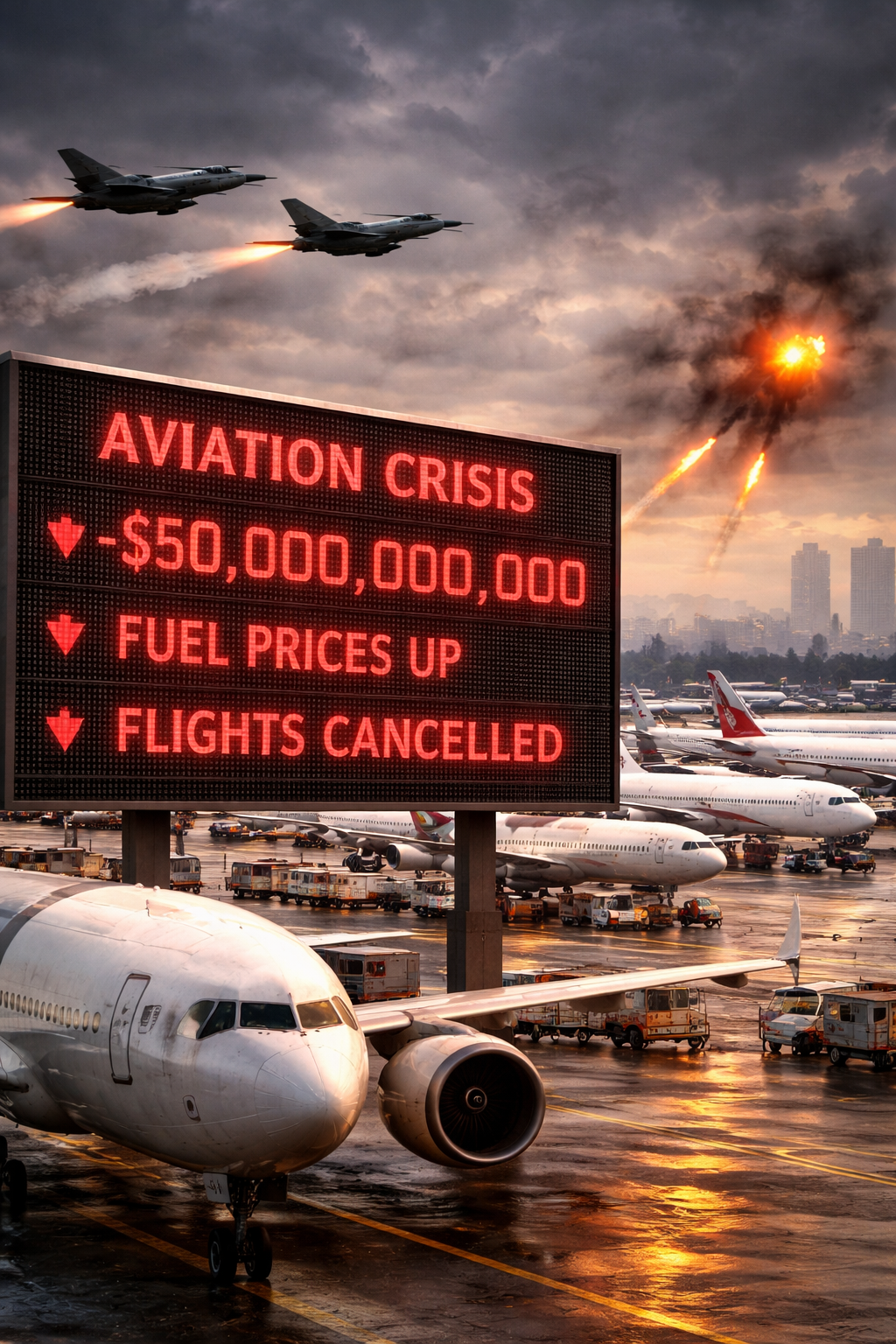
Gulf Conflict Sparks Worst Aviation Crisis Since COVID-19
Airline Suffers $ 50 bn Losses Due To Jet Fuel Prices Double and Middle East Airspace Closures Disrupt Global Aviation.
The global aviation industry is facing its most severe crisis since the COVID-19 pandemic, as the Iran war triggers unprecedented disruption across fuel markets, airspace corridors and airline operations. According to industry estimates, the world’s leading carriers have collectively lost more than $50 billion in market value, driven largely by a sharp surge in jet fuel prices and widespread flight disruptions across the Middle East FT reported.
Jet fuel prices—accounting for nearly one-third of airline operating costs—have more than doubled in recent weeks as the conflict disrupted oil flows through the Strait of Hormuz, a critical global energy artery. The resulting energy shock has forced airlines to raise ticket prices, cut capacity on less profitable routes, and reconsider expansion plans, with several global carriers already scaling back services or suspending Middle East operations.
Airspace closures across key Gulf states, including Iran and neighboring countries, have compounded the crisis by forcing airlines to reroute flights over longer distances. These diversions have increased fuel burn, flight times and operational complexity, leading to thousands of cancellations and delays worldwide.
For Pakistan, the fallout is particularly acute. As a country heavily reliant on Gulf air corridors for passenger and cargo connectivity, Pakistan is witnessing a direct impact on flight schedules, operational costs and ticket pricing. Airlines operating to and from cities such as Karachi, Lahore and Islamabad are increasingly forced to adopt longer routes, significantly raising fuel consumption and putting pressure on already thin margins.
The surge in aviation turbine fuel (ATF) prices is also feeding into broader economic challenges. With oil imports forming a major part of Pakistan’s external account, the ongoing conflict is likely to inflate the country’s import bill, weaken the currency outlook and contribute to rising inflation. Higher airfares may further dampen travel demand, particularly among Pakistani workers traveling to Gulf countries.
Globally, airline executives warn that the situation could deteriorate further if the conflict persists. With fuel prices expected to remain elevated and geopolitical risks unresolved, the aviation sector is bracing for prolonged volatility. For Pakistan, the crisis underscores the vulnerability of its aviation industry to external shocks, raising concerns over sustainability, connectivity and cost pressures in the months ahead.

