

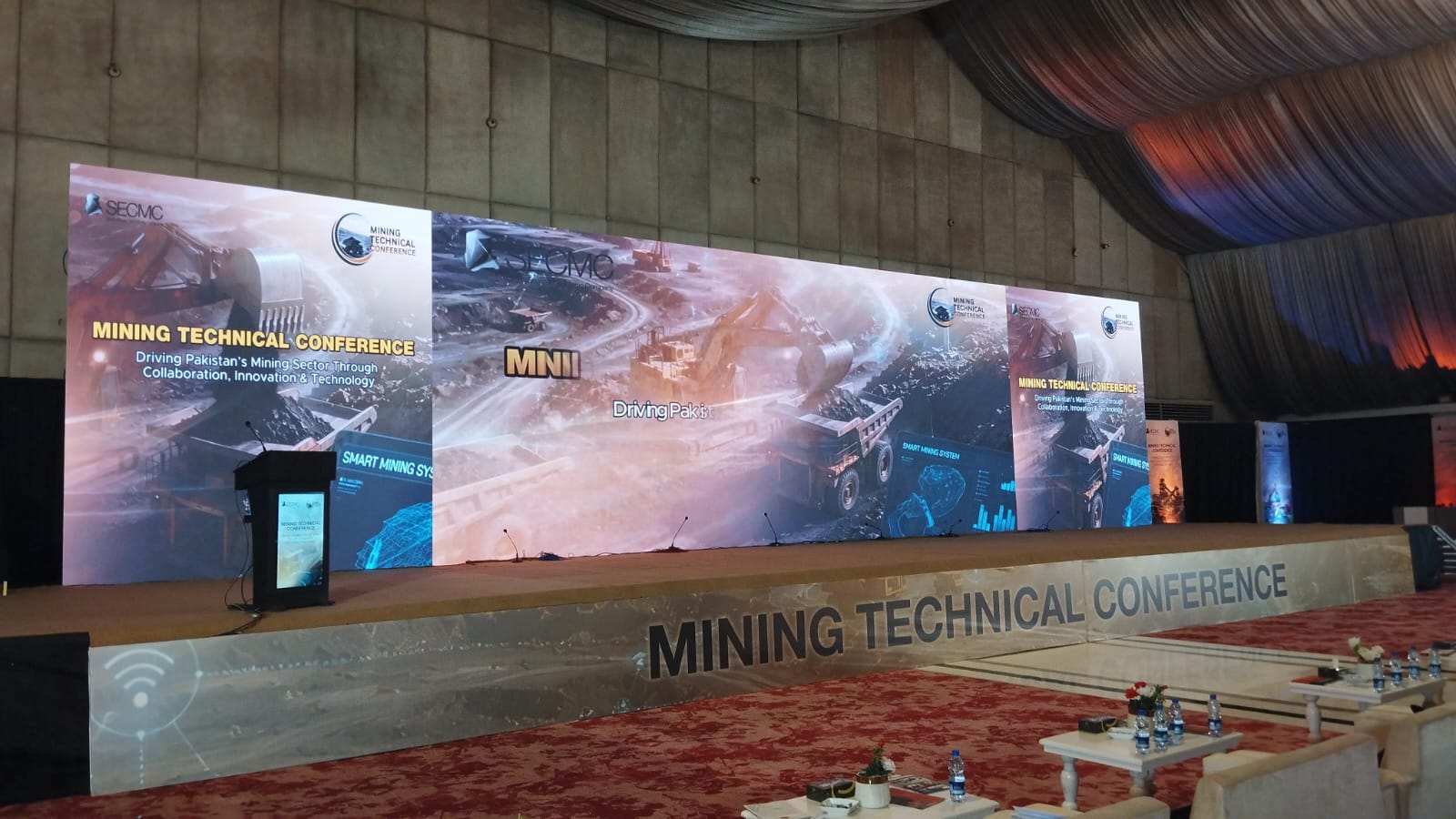
KARACHI, August 6, 2026: Pakistan has mineral resources, experienced mining companies, academic institutions and access to emerging global technologies. What the country’s mining sector has lacked, however, is a common platform where these different parts of the ecosystem can sit together, exchange knowledge and work towards shared priorities.
Recognizing this need, Sindh Engro Coal Mining Company (SECMC) organized the Mining Technical Conference 2026 under the theme “Driving Pakistan’s Mining Sector through Collaboration, Innovation & Technology.”
Drawing on its operational experience in Thar and its position within Pakistan’s mining and energy landscape, SECMC designed the conference as a sector-wide forum to bring together stakeholders operating within separate technical, commercial, academic and policy environments and provide a shared space to discuss challenges affecting the entire industry.
By convening government representatives, mining companies, academic institutions, researchers, equipment manufacturers and international technology providers on a single platform, SECMC sought to initiate sustained collaboration beyond individual projects and institutional boundaries.
Representatives from Reko Diq Mining Company, Pakistan Petroleum Limited, SSRL, National Resources Limited, HUBCO, Fauji Group, Fauji Fertilizer Company, Lucky Cement, Komatsu, DMT Germany, EACON Mining Technology, Tonly Heavy Industries and other national and international organizations participated in the event.
Chief Minister Sindh Syed Murad Ali Shah attended the conference as chief guest and delivered the keynote address. Speaking on the occasion, the chief minister said the mining technical conference is a landmark event bringing together three pillars – industry, academia and technology – that will determine the future of the mining sector.
“Pakistan has vast untapped mineral resources that require investment and technology. The Government of Sindh recognized this and designed a policy framework that lead to a transformation. The future of the industry depend on developing human capital who will lead the industry for decades. I urge the companies to not just invest in mining and machinery but also people,” he said.
The chief minister said the provincial government provided the legal and policy framework to develop Thar’s coal. He mentioned that two blocks are currently operational, including one by SECMC and the utilization of indigenous resources has saved $3.2 billion that could have been spent on expensive fuel imports.
“Pakistan’s mineral resources could become a major source of employment, industrial growth and national economic value if developed through responsible investment, modern technology and skilled human capital’ he said, adding that Sindh would continue to facilitate responsible investment and partnerships capable of creating long-term benefits for the national economy and local communities.
Amir Iqbal, Chief Executive Officer of SECMC, said global companies are interested in investigating in Pakistan’s vast untapped mineral resources. He said the company’s role as organizer was to create a productive space where diverse stakeholders could move beyond institutional boundaries and develop a shared direction for the industry.
“Our responsibility as the convenor was to bring the right stakeholders to one table. Mining companies understand operational realities, universities bring research and knowledge, technology providers offer innovative solutions, and the government provides policy direction. Meaningful progress becomes possible when all these strengths are connected,” he said.
“No single organization can transform Pakistan’s mining sector on its own. We need sustained partnerships that connect operational experience, academic knowledge, government support and global technological expertise.”
He said SECMC intended the conference to become a continuing platform through which the industry could identify common challenges, exchange knowledge and develop practical partnerships for research, workforce development and technology adoption.
The conference’s objective was to begin building a coordinated framework for the long-term development of Pakistan’s mining industry, with collaboration, skills development and technological innovation at its core. A key message emerging from the conference was that technological advancement cannot take place without parallel investment in people and skills. As mining operations become increasingly digital, automated and data driven, the sector will require skilled equipment operators, mining engineers, geologists, data specialists, researchers and technical professionals capable of working with modern systems.
Participants emphasized that mining companies, academic institutions, government bodies and technology providers must share responsibility for skills development. Mining companies can identify operational challenges and workforce requirements; universities can align their curricula and research with industry needs; technology providers can support knowledge transfer and technical training; while the government can create an enabling environment for collaboration and investment.
Throughout the day, technical sessions explored mining technology, equipment modernization, artificial intelligence, automation, digitalization, exploration, mine development, ESG practices, operational efficiency and applied academic research. The discussions focused not only on what technologies are available globally, but also on which solutions are relevant to Pakistan, how they can be adapted to local mining conditions and what skills will be required to use them effectively.
A dedicated panel discussion considered the establishment of a National Mining Industry Platform or Society to provide the sector with a permanent mechanism for collaboration, knowledge sharing, skills development, research partnerships and coordinated policy engagement.
The proposed platform would bring together mining and energy companies, universities, professional experts, government institutions and technology providers to identify shared challenges, develop industry standards and support the responsible adoption of new technologies.
Participants also proposed that the Mining Technical Conference should become an annual event where the sector can review progress, assess emerging technologies, identify workforce requirements and agree on priorities for the year ahead.
The lasting value of the conference will not be measured only by the number of organizations that attended, but by the partnerships, research initiatives, training opportunities and industry wide reforms that emerge from it.
For Pakistan’s mining sector, the conference represented a first step away from fragmented efforts and towards a future built on shared knowledge, stronger skills and coordinated technological progress.

