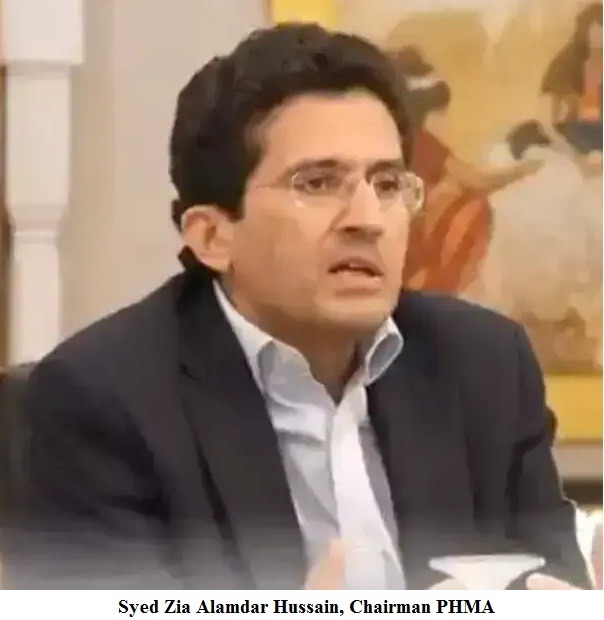
KARACHI: Syed Zia Alamdar Hussain, Central Chairman of the Pakistan Hosiery Manufacturers & Exporters Association (PHMA), has appreciated the Government of Pakistan’s decision to continue the Export Facilitation Scheme (EFS), terming it a positive step towards promoting exports, facilitating the business community and strengthening the country’s export-oriented industries. He urged the government to reinstate the Export Facilitation Scheme (EFS) in its original form under SRO 957(I)/2021, as it stood prior to the changes introduced in the Federal Budget 2024–25. He expressed hope that the government would continue engaging with industry stakeholders to resolve operational challenges, ensure the availability of essential raw materials and enhance Pakistan’s export competitiveness.
However, the PHMA Central Chairman emphasized that the recent decline in exports must also be examined in the context of policy changes that have increased the cost of doing business and created serious cash flow challenges for textile exporters. He pointed out that the withdrawal of zero-rating on eligible local supplies under SRO 1281(I)/2024 dated August 20, 2024, followed by the exclusion of raw cotton, cotton yarn and grey fabric from the scope of EFS 2021 through SRO 1435(I)/2025 dated August 5, 2025, has adversely affected the textile value chain and placed additional financial pressure on export-oriented manufacturers.
PHMA Chairman observed that under the previous framework, eligible local supplies to authorized exporters were available on a zero-rated basis, enabling manufacturers to procure essential raw materials without blocking substantial working capital in sales tax payments. Following the withdrawal of this facility, exporters are required to pay 18% sales tax on taxable local purchases, resulting in a significant increase in production costs and putting locally procured inputs at a disadvantage compared with eligible imported inputs under the export facilitation framework.
Highlighting the severity of the situation, he stated that cash flow has become one of the biggest challenges for textile exporters. The production, processing and shipment of export goods can take approximately 180 days, while the sales tax refund process may extend the period during which exporters’ funds remain tied up. Consequently, exporters must finance substantial sales tax payments from their own resources or through bank borrowing while continuing to meet expenses relating to wages, electricity, gas, raw materials, freight and other operational requirements.
He further explained that the blockage of working capital increases financial and borrowing costs, restricts production capacity and makes it difficult for exporters to fulfil orders at internationally competitive prices. These difficulties are particularly severe for small and medium-sized enterprises, which have limited financial resources to absorb prolonged refund delays and additional tax burdens. He stressed that export growth cannot be sustained unless exporters have timely access to their own funds and a predictable, business-friendly tax and facilitation regime.
The PHMA Central Chairman urged the government to restore zero-rating on eligible local supplies to authorized exporters under EFS 2021, subject to appropriate verification and audit controls. He also called for the reinstatement of raw cotton, cotton yarn and grey fabric within the scheme, particularly where domestic suppliers cannot meet exporters’ requirements regarding quality, quantity, delivery schedules or competitive prices. He emphasized that timely sales tax refunds and consistent export policies are essential to reducing production costs, strengthening domestic manufacturing and ensuring a level playing field for Pakistani exporters.
Mr. Zia Alamdar reaffirmed PHMA’s full support for the government’s efforts to prevent misuse of the Export Facilitation Scheme (EFS) and protect the national exchequer. He emphasized that it is the responsibility of the government and the relevant regulatory authorities to identify and investigate any misuse of the scheme and take appropriate action where violations are established, in accordance with the law and due process. He stressed that any irregularities should be addressed through targeted enforcement and effective monitoring rather than imposing blanket restrictions that could adversely affect genuine and compliant beneficiaries. He further emphasized the importance of constructive consultation with industry stakeholders to address concerns regarding the scheme’s continuation and implementation. The objective should be to strengthen transparency, accountability and compliance while preserving the benefits of EFS for legitimate businesses and ensuring that the facility continues to support Pakistan’s export growth.
Concluding his statement, the PHMA Central Chairman said that the government’s decision to continue EFS is a welcome development; however, meaningful relief requires restoration of the essential facilitation measures that enable exporters to operate efficiently. He expressed confidence that a constructive partnership between the government and representative value-added exporting associations would help address genuine concerns, restore business confidence, generate employment, strengthen domestic value addition and place Pakistan’s exports on a sustainable growth trajectory.
PHMA APPRECIATES GOVERNMENT’S DECISION TO CONTINUE EFS; DEMANDS FOR RESTORATION OF ITS ORIGINAL FRAMEWORK UNDER SRO957(I)/2021