


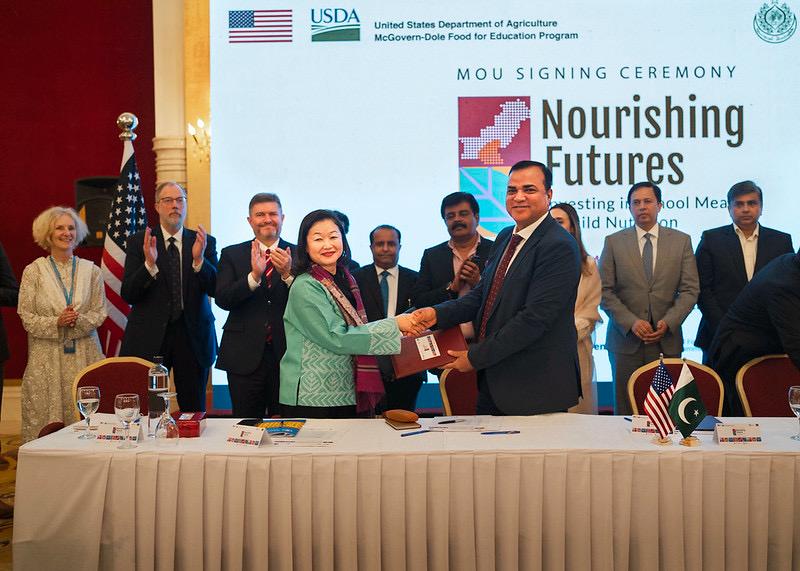
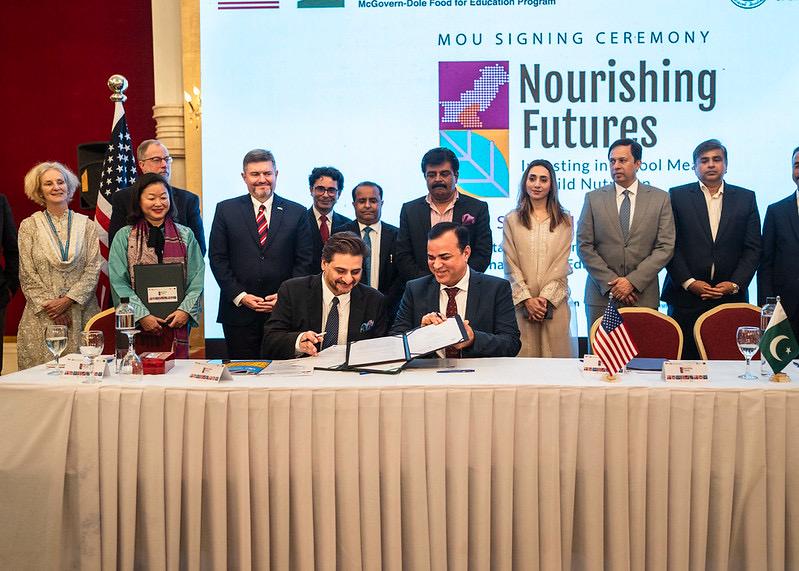
In a landmark move to combat child malnutrition and boost literacy, the Government of Sindh and the United States Department of Agriculture (USDA) have officially launched the Sindh School Meals Program.
Backed by a $80 million grant from the USDA’s McGovern-Dole International Food for Education and Child Nutrition Program, the initiative will provide daily nutritious meals and take-home rations to over 200,000 students across approximately 1,300 primary schools in Sindh.
Strengthening Education through Nutrition
The program is a strategic response to the nutritional deficiencies exacerbated by recent climate disasters and economic shifts in Pakistan. By providing consistent meals, the project aims to:
- Increase School Enrolment: Encouraging out-of-school children to return to classrooms.
- Improve Attendance: Reducing hunger-related absenteeism.
- Enhance Learning Outcomes: Ensuring students have the energy to concentrate and succeed.


Strategic Partnership: Save the Children & WFP
The initiative will be implemented by Save the Children and the World Food Programme (WFP). These organizations will work in close coordination with provincial departments, including Education, Health, and Planning & Development.
“Education is the engine of the nation’s growth,” stated Syed Sardar Ali Shah, Sindh Minister for Education. “This partnership fulfills a promise to give every child in Sindh a chance at a healthy, bright future.”
Local Economy & Sustainability
Unlike traditional aid, this program bridges international support with local growth. While the U.S. provides commodities like wheat and oil, fresh produce—including fruits and vegetables—will be sourced directly from Sindh’s local farmers. This “Home-Grown School Feeding” model supports the provincial economy and ensures food freshness.
Key Program Features:
- Capacity Building: Over 1,000 teachers and school management members will be trained in food safety and nutrition.
- WASH Facilities: Rehabilitation of Water, Sanitation, and Hygiene (WASH) stations in schools to ensure a safe eating environment.
- Transparency: A Joint Steering Committee will oversee implementation to ensure every dollar reaches the targeted students.

