

Brent Crude Surges Towards $82; Strait of Hormuz ‘Choke point’ Threatens One-Fifth of Global Supply
Pakistan Braces for Inflationary Shock wave as Imported Energy Costs Risk Economic Stability
KARACHI/WASHINGTON: Global energy markets were thrown into turmoil on Monday as oil prices surged following weekend military strikes by the United States and Israel against Iranian targets. The escalation has ignited fears of a prolonged conflict in the Middle East, threatening the world’s most critical oil transit routes and casting a shadow over the economic stability of developing nations, including Pakistan۔
Oil Markets in Fever Pitch
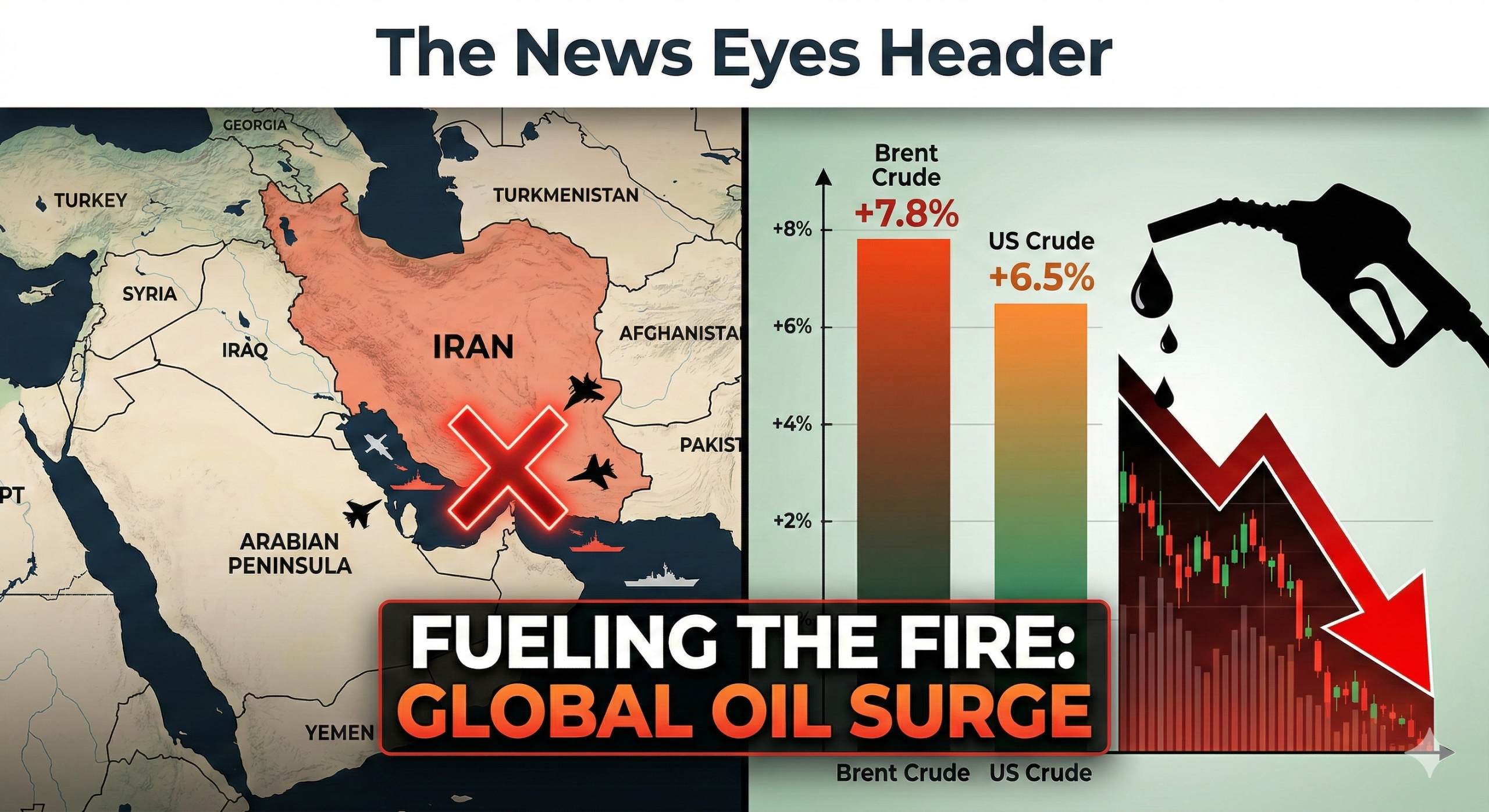
US crude jumped by 7.8%, while Brent crude—the international benchmark—spiked 6.5% to trade near $77 per barrel, after briefly touching an intraday high of $82. The price hike comes despite a preemptive move by OPEC+ to raise daily output by 206,000 barrels, a volume analysts say is “woefully insufficient” to offset a major disruption in Iranian supply.
The ‘Hormuz’ Factor
The primary concern for global traders is the Strait of Hormuz, a narrow waterway controlled on its northern side by Iran. According to the US Energy Information Administration, approximately 20 million barrels of oil—nearly 20% of daily global consumption—pass through this channel.
“Closing the Strait of Hormuz would trigger an unprecedented energy crisis,” warned Bob McNally, President of Rapidan Energy Group. Analysts at Goldman Sachs suggest that any extended disruption could see oil prices easily blow past the $100 per barrel mark.
Implications for Pakistan
For Pakistan, an economy already grappling with high CAD (Current Account Deficit) and fragile foreign exchange reserves, the surge is an omen of a fresh inflationary wave. As a net importer of petroleum products, any sustained increase in global crude will inevitably lead to:
Higher Pump Prices: Immediate pressure on domestic petrol and diesel rates.
Rising Freight Costs: Increasing the price of essential food commodities.
Power Tariffs: Higher costs for furnace oil and RLNG-based power generation.
Global Market Reaction
While defense giants like Lockheed Martin and oil majors ExxonMobil saw share prices rise in pre-market trading, broader stock futures for the S&P 500 and Nasdaq fell by over 1%. In Asia, economies like China and India—which rely heavily on Iranian crude—are expected to scramble for substitute supplies, further driving up global premiums.
While President Donald Trump suggested the conflict “could last weeks,” the market remains on edge. For Pakistan, the focus remains on the “Abqaiq” risk—the possibility of attacks on Saudi Arabian infrastructure, which would leave the global market without its most vital cushion.

