

KSE-100 Plunges Over 16,000 Points as US-Iran Conflict Spooks Investors
Market Meltdown: Benchmark Index Records Historic One-Day Fall; Trading Halted to Curb Panic Selling
Energy Crisis Fears: Escalating Geopolitical Tensions Ignite Concerns Over Oil Supply and Inflationary Pressure
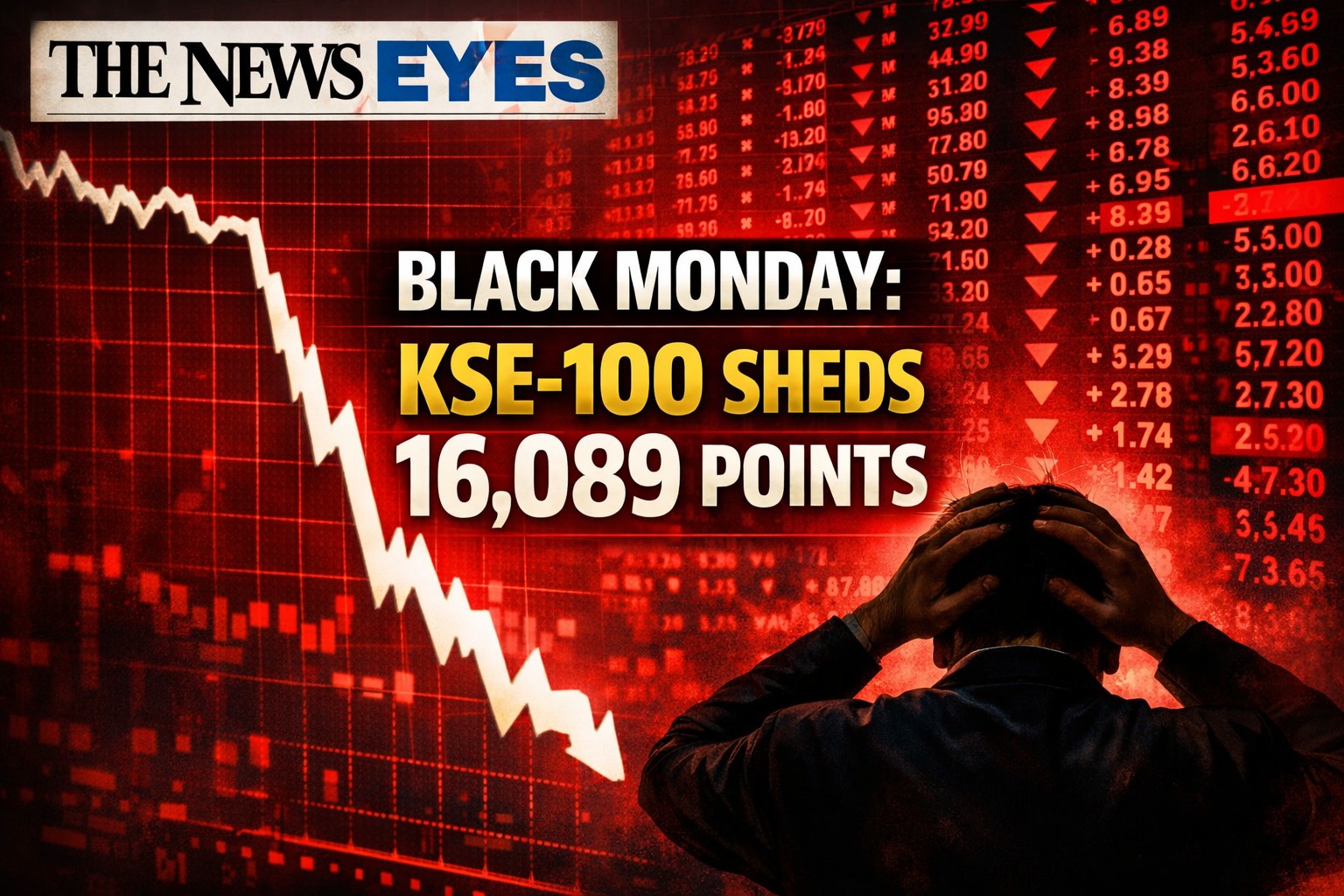
KARACHI: The Pakistan Stock Exchange (PSX) endured a “Black Monday” as the benchmark KSE-100 Index plummeted by a staggering 16,089 points, marking the largest single-day crash in the country’s history. The nearly 10% decline was triggered by escalating military tensions between the US and Iran, sending shockwaves through global markets and local investor sentiment.
The bloodbath began immediately after the opening bell. By 9:22 AM, the index had shed over 15,000 points, prompting regulators to activate a market-wide “circuit breaker.” Trading was suspended for one hour after the KSE-30 index fell beyond the 5% threshold, a move designed to provide a “cooling-off” period for panicked traders.
Volatility and Recovery Attempts While the market saw a brief 6,000-point recovery following the resumption of trade at 10:22 AM, the momentum was short-lived. Intense selling pressure returned in the final hours of the session. The KSE-100 eventually settled at 151,972.99, down 9.57%.
Economic Implications Market analysts cite the “risk-off” sentiment as the primary driver. Topline Securities noted that the sharp sell-off reflects global fears of a wider regional conflict. Experts are particularly concerned about the impact on Pakistan’s fragile economy.
“Elevated oil prices are highly detrimental to Pakistan’s external account,” warned Waqas Ghani, Head of Research at JS Global. “Persistently high commodity prices are likely to trigger a new wave of inflation, further squeezing the domestic economy.”
Sector-Wide Impact The carnage was visible across all major sectors. Blue-chip stocks and index heavyweights, including OGDC, PPL, HUBCO, and HBL, all traded in the red. The sell-off was felt most acutely in:
- Energy & Refineries: Due to fears of supply chain disruptions in the Strait of Hormuz.
- Commercial Banks & Fertilizer: As investors scrambled for liquidity.
- Automobile & Cement: On expectations of rising input costs.
This record-breaking dip follows a volatile previous week where the index had already shed over 5,000 points due to regional instability and domestic security concerns.

