

Electric two-wheelers offer running cost as low as Rs2 per km amid petrol price uncertainty
From Honda CD70 to EV scooters, cost comparison highlights major shift in commuting trends
Karachi, March 27: As petrol prices continue to hover at elevated levels in Pakistan, daily commuters are increasingly turning towards electric bikes and scooters as a cost-effective alternative, signaling a gradual but notable shift in the country’s mobility landscape.
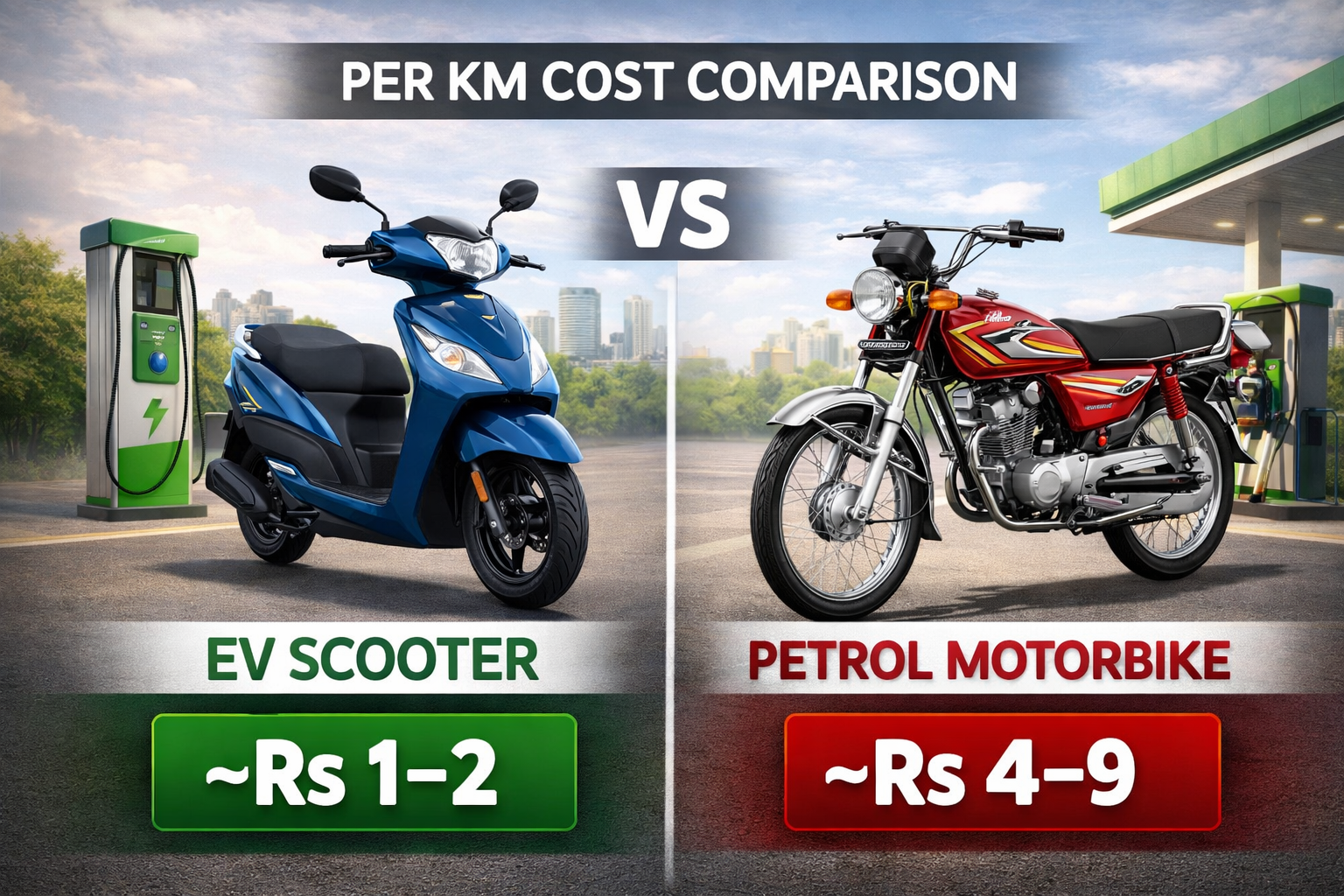
With petrol estimated at around Rs 321 per litre, the cost of running conventional motorcycles has surged, putting pressure on millions of riders who rely on two-wheelers for daily travel. In contrast, electric vehicles (EVs) are emerging as a significantly cheaper option, with operating costs dropping to as low as Rs1 to Rs2 per kilometre.
Petrol Bikes vs Electric: A Growing Cost Divide
Among petrol-powered bikes, the Honda CD70 remains the most fuel-efficient option, delivering an average of around 60 km per litre. However, even this economy leader now costs approximately Rs 5 to Rs 6 per kilometre to operate.
In the 125cc category—including models like Honda CB 125F, Yamaha YBR, and Honda CG 125—fuel efficiency drops to 40–45 km per litre, pushing per kilometre costs to Rs 7 to 8.
For higher engine bikes such as Suzuki GS150, Honda CB150F, and similar 150cc models, fuel consumption averages 30–35 km per litre, translating into Rs 9 to 19 per kilometre—making them increasingly expensive for regular commuting.
EV Advantage: Lower Costs, Stable Expenses
Electric bikes, on the other hand, are proving to be far more economical due to their reliance on electricity instead of fuel. Based on average electricity tariffs of Rs35 to Rs45 per unit, a full charge typically costs between Rs100 and Rs150 and delivers a range of 70–100 kilometres.
This brings the cost per kilometre down to nearly Rs1–2—making EVs up to five times cheaper to run than petrol-powered bikes.
Unlike petrol prices, which are heavily influenced by global geopolitics, currency fluctuations, and supply chain disruptions, electricity-based commuting offers more predictable and stable expenses.
Market Players Expanding EV Options
Several companies are now actively expanding Pakistan’s electric two-wheeler market. Brands like Evee, Metro, and United are introducing a range of scooters and bikes tailored for urban commuters.
Evee’s models, including the Evee C1 and Evee S1, are gaining popularity for their modern design, smooth ride, and efficient battery performance. Meanwhile, Metro’s offerings such as the Metro T9 and Metro E8S are known for affordability and strong after-sales support.
United has also entered the segment with electric motorcycles that combine traditional bike styling with electric power, appealing to riders looking for a familiar design with lower running costs.
Technology Boost: Graphene Batteries
A key innovation driving EV adoption is the introduction of graphene battery technology in modern scooters. These batteries offer faster charging, longer lifespan, and better heat resistance—enhancing both performance and long-term savings for users.
Uncertain Fuel Outlook Driving Transition
While some analysts suggest petrol prices may stabilize if global conflicts ease, historical trends indicate that prices rarely return to pre-crisis levels for long. This ongoing uncertainty is pushing consumers to reconsider long-term mobility choices.
Experts believe that the shift toward electric mobility is no longer a distant possibility but an immediate economic decision for many households.
A Long-Term Investment
With significantly lower running costs, minimal maintenance, and increasing availability, electric bikes are rapidly becoming a practical solution for daily commuting in Pakistan.
As fuel prices remain unpredictable, the move toward electric may not just be about saving money—it could define the future of urban transport in the country.

